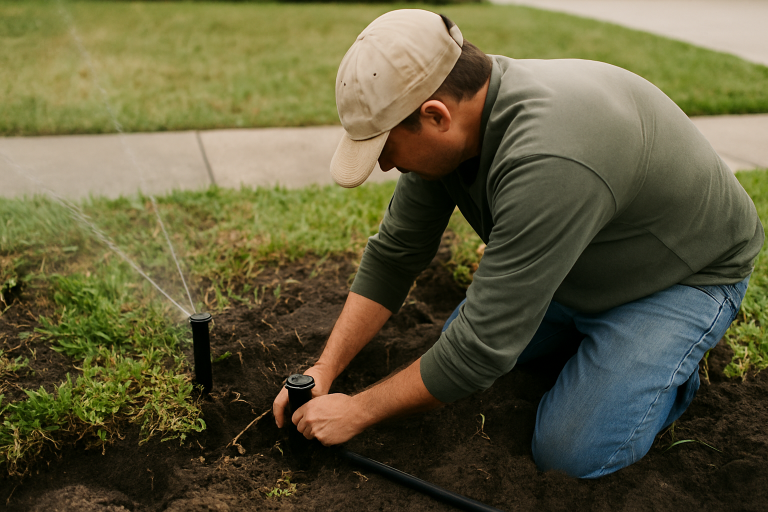
Brevard County’s water management district logged over 200 watering restriction violations in a single dry season last year, and most of them involved traditional spray sprinkler systems. Drip irrigation sidesteps that problem almost entirely, delivering water directly to root zones at rates that comply with nearly every local watering schedule. If you’re a Melbourne homeowner researching whether a drip irrigation system is worth the investment, this guide covers what you’ll actually pay, how long installation takes, and the local factors that most contractors won’t mention until they’re already on your property.
Key Takeaways
- Drip irrigation installation in Melbourne, FL typically costs between $1,200 and $3,500 for a standard residential property, depending on coverage area and soil conditions.
- Most residential installations take one to two days once permits (if required) are cleared.
- Brevard County’s sandy coastal soils drain fast, which means drip emitter spacing and flow rates need local calibration, not a one-size-fits-all setup.
- St. Johns River Water Management District rules cap irrigation frequency, and drip systems often qualify for micro-irrigation exemptions that spray systems do not.
- A licensed, insured local contractor matters here, because the wrong emitter spec for Melbourne’s soil type can waste as much water as the spray system you replaced.
What Is a Drip Irrigation System and Is It Right for Your Melbourne Property?
A drip irrigation system delivers water through a network of low-pressure tubing and emitters placed at or just below soil level, directly at the base of plants. There’s no misting, no overspray onto hardscapes, and no water lost to evaporation before it reaches roots. The St. Johns River Water Management District, which governs water use across Brevard County, classifies drip and micro-irrigation as preferred methods precisely because of these efficiency gains.
That said, drip isn’t the right answer for every Melbourne yard. Large turf areas, like a wide St. Augustine lawn, are still better served by a properly zoned sprinkler system installation. Where drip excels is in planting beds, vegetable gardens, shrub borders, foundation plantings, and any area where you’re growing ornamentals or fruit trees and want to keep fungal issues down by keeping foliage dry.
Melbourne’s humidity creates real disease pressure on plants whose leaves stay wet. Drip keeps water below the canopy, which is a meaningful advantage in a climate that averages over 50 inches of rain annually, most of it concentrated in summer thunderstorms. During the dry season from November through May, that targeted delivery becomes critical.
How Much Does Drip Irrigation Installation Cost in Melbourne, FL?
For a standard Melbourne residential property, drip irrigation installation runs between $1,200 and $3,500 installed. That range is wide because the variables are real, not padding. Here’s what drives the number:
- Coverage area: A 500-square-foot planting bed with 20 emitter points costs far less to outfit than a full perimeter of foundation plantings around a 2,500-square-foot home.
- Emitter type and spacing: Pressure-compensating emitters cost more than standard ones, but they’re often necessary in Melbourne’s flatter neighborhoods where elevation changes are minimal and line pressure can vary.
- Controller integration: Adding a smart controller or tying into an existing system costs $150 to $400 more, but the water savings in Melbourne’s dry season typically recover that within one to two years.
- Soil prep: Sandy Florida soils drain fast. In some cases, a contractor will recommend a filter or pressure regulator to prevent emitter clogging from fine particles, which adds $75 to $200 to the project.
- Labor: Professional installation typically runs $45 to $85 per hour in Brevard County. Most residential drip jobs require four to eight hours of labor.
DIY drip kits from hardware stores start at $50, but they’re almost always undersized and use non-pressure-compensating emitters that perform poorly in the variable pressure conditions common in Melbourne’s residential water supply lines. You’ll spend more troubleshooting uneven watering than you saved on installation.
Irrigation Inc. offers a free drip irrigation inspection and estimate, so you can get an exact number for your property before committing to anything.
What Is the Typical Installation Timeline?
A straightforward residential drip irrigation installation in Melbourne takes one to two days from start to finish, assuming no permitting delays and no major obstacles like concrete or root-heavy soil.
Here’s a realistic step-by-step sequence:
- Site assessment (Day 1, 1 to 2 hours): The contractor walks the property, measures zones, checks static water pressure at the supply line, and identifies any existing irrigation zones that will share a controller. This is where Melbourne-specific factors get flagged, including proximity to the coast, soil type, and sun exposure by zone.
- Materials staging (Day 1, 30 to 60 minutes): Tubing, emitters, stakes, filters, pressure regulators, and fittings are laid out. A quality contractor pre-stages everything before digging or trenching begins.
- Main line installation (Day 1, 2 to 4 hours): The supply tubing runs from the water source or existing irrigation backflow preventer to each zone. In Melbourne, this is usually done with 1/2-inch polyethylene tubing laid just below the mulch line rather than buried deep, since root systems in sandy soil stay relatively shallow.
- Emitter placement and secondary line runs (Day 1 to 2, 2 to 4 hours): 1/4-inch microtubing branches from the main line to individual emitters at each plant base. Emitter flow rates (typically 0.5 to 2 gallons per hour in residential applications) are matched to plant type and the soil’s drainage rate.
- Controller programming and zone testing (Day 2, 1 to 2 hours): The contractor programs run times to comply with Brevard County watering schedules and tests each zone for uniform output. Any emitters with low or no flow get replaced before the job is called complete.
- Walkthrough and handoff: A good contractor walks you through the controller, explains how to adjust for seasonal changes, and leaves a zone map. Ask for it in writing if it’s not offered.
Permitting can extend this timeline. See the FAQ section below for specifics on when Brevard County requires a permit for drip irrigation work.
Local Considerations: Melbourne’s Climate, Soil, and Water Regulations
This is where most generic irrigation articles fail Melbourne homeowners. Florida’s coasts are not generic, and Brevard County has a specific set of conditions that affect how a drip system should be designed and maintained.
Sandy Coastal Soil
Melbourne sits on sandy, well-drained soils with very low water-holding capacity. According to the University of Florida IFAS Extension, Florida’s coastal sandy soils can lose applied water to percolation within minutes, which means drip systems here need shorter, more frequent run cycles rather than the longer, less-frequent cycles that work in clay-heavy soils up north. A contractor who doesn’t calibrate for this will design a system that either dries out your plants or wastes water chasing drainage.
Brevard County Watering Restrictions
The St. Johns River Water Management District limits landscape irrigation to specific days and times based on your property address. Year-round restrictions apply county-wide, with stricter limits during drought declarations. The key advantage for drip system owners: the district exempts hand-watering and micro-irrigation (including drip) from some of these schedule restrictions, meaning you may be able to water more flexibly than your neighbor with a spray system. Confirm the current exemption language with your contractor, as these rules are updated periodically.
Salt Air and Coastal Corrosion
Properties within a mile or two of the Indian River Lagoon or the Atlantic coast see accelerated corrosion on metal irrigation components. Specify UV-resistant polyethylene tubing and plastic emitters rather than metal-bodied fittings wherever possible. Stainless or brass backflow preventers are fine, but check them annually for pitting.
HOA Landscaping Rules
Many Melbourne-area HOAs require that irrigation systems be installed by licensed contractors and may require that tubing be concealed under mulch or below grade. Before scheduling installation, pull your HOA’s landscape guidelines and share them with your contractor. This step prevents expensive re-dos.
If you’re also considering a broader yard update alongside your drip installation, the landscape renovation services in Melbourne, FL can help coordinate those projects together, which often reduces total labor cost.
How to Choose the Right Irrigation Contractor in Brevard County
Florida requires irrigation contractors to hold a Lawn and Ornamental (LO) or Irrigation (IA) specialty license issued by the Florida Department of Agriculture and Consumer Services. Ask to see the license number before signing anything. An unlicensed installer who improperly connects to your potable water supply can create a backflow contamination risk and leave you liable for code violations.
Beyond licensing, look for:
- Local experience in Brevard County specifically. A contractor who has installed systems in Melbourne’s soil conditions will size emitters and schedule run times differently than one who learned the trade in a different climate.
- Insurance. General liability and workers’ compensation protect you if something goes wrong on your property. Request a certificate before work begins.
- A written proposal with zone maps. Any reputable contractor should provide a diagram showing where each zone runs and what emitter type and flow rate is specified for each area.
- Maintenance availability. A drip system needs periodic flushing, emitter checks, and filter cleaning. Ask whether the contractor offers ongoing irrigation system maintenance or whether you’ll be on your own after installation.
Irrigation Inc. is licensed and insured, serves Melbourne and all of Brevard County, and backs every installation with a free inspection and estimate. You can also review the full drip irrigation installation and repair services to understand exactly what’s included before your first call.
If your project involves more than just the irrigation system, the full landscaping services available in the area can help you plan plantings and coverage zones alongside the irrigation design, so both systems work together from day one.
What to Do Next
A properly designed drip irrigation system in Melbourne will reduce your water bill, keep your plants healthier through the dry season, and keep you clear of Brevard County watering restriction violations. The key is getting the design right for Melbourne’s specific soil and pressure conditions, not just installing a generic kit. One conversation with a local licensed contractor will tell you more than any online guide can.
Get Your Free Drip Irrigation Inspection and Estimate. Call Irrigation Inc. at +1 321-514-0315. We serve Melbourne, FL and all of Brevard County. You can also request a quote online to get the process started today.
Frequently Asked Questions
How much does drip irrigation installation cost in Melbourne, FL?
Most residential drip irrigation installations in Melbourne, FL cost between $1,200 and $3,500 installed, depending on the size of the area being covered, the emitter types required, and whether a new controller or backflow preventer is needed. Sandy soil conditions in Brevard County may also require a pressure regulator and inline filter, which add $75 to $200 to the project. Get a site-specific estimate before budgeting.
How long does it take to install a drip irrigation system?
A standard residential drip irrigation installation in Melbourne typically takes one to two days. That includes site assessment, main line runs, emitter placement, controller programming, and zone testing. If a permit is required (generally for larger or more complex systems), add one to two weeks for permit processing before work can begin.
Do I need a permit for drip irrigation installation in Brevard County?
Small residential drip irrigation additions that connect to an existing permitted irrigation system generally do not require a separate permit in Brevard County. New system installations or any work that involves a new connection to the potable water supply or a new backflow prevention device typically does require a permit. Confirm with your contractor and, if needed, with the City of Melbourne Building Department before work starts.
Is drip irrigation better than a sprinkler system in Florida’s climate?
For planting beds, shrubs, trees, and vegetable gardens, yes. Drip irrigation keeps foliage dry, which reduces fungal disease pressure in Florida’s humid climate. It also delivers water directly to root zones, which matters in Brevard County’s fast-draining sandy soils. For large turf areas, a well-designed spray or rotor sprinkler system is still more practical. Many Melbourne properties benefit from a hybrid setup with drip zones for beds and spray zones for lawn areas.
How often does a drip irrigation system need maintenance in Melbourne?
A drip system in Melbourne should be inspected and flushed at least twice a year, ideally at the start of the dry season (November) and again in spring before summer rains begin. Sandy soil particles and mineral deposits can clog emitters over time. Filters should be cleaned every three to four months, and emitters should be checked for uniform output annually. A licensed irrigation contractor can handle this as part of a routine maintenance plan.