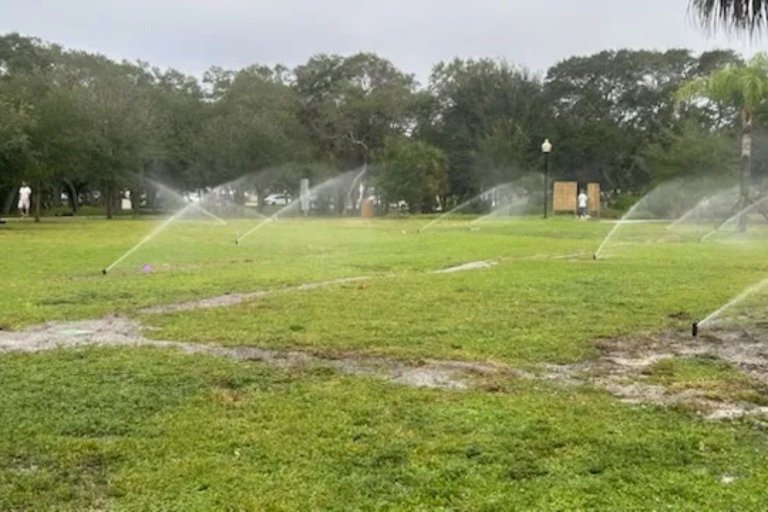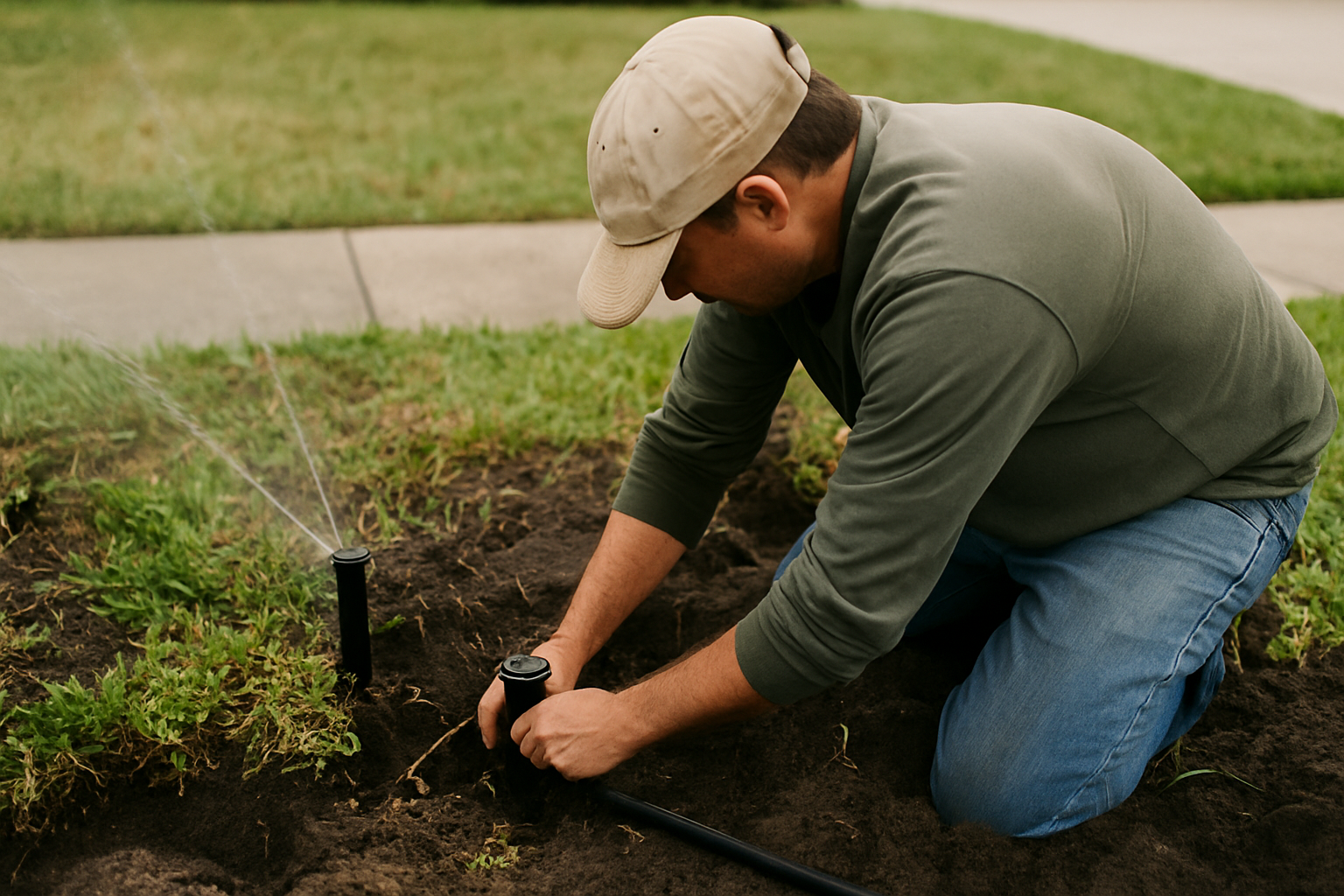
Brown patches on one side of the lawn and soggy ground on the other. A water bill that jumped for no obvious reason. A head that barely rises out of the grass anymore. These are the moments homeowners in Melbourne and across Brevard County usually realize something is off, and by then a sprinkler system failing quietly for weeks has already cost more than it needed to.
A single broken zone left unaddressed through one Brevard County dry season can kill St. Augustine sod that runs $0.50 to $0.75 per square foot to replace, and that’s before labor, soil prep, and weeks of recovery. Catch a failing sprinkler system early and the fix is usually simple. Miss it, and you’re looking at dead turf, a torn up yard, or a water bill your spouse wants an explanation for.
Key Takeaways
- Uneven watering, dry patches on one side and soggy ground on the other, almost always points to a pressure problem, a clogged head, or a failed zone valve, not bad luck.
- A water bill that jumps 20 percent or more with no change in habits is one of the most reliable signs of an underground leak in Brevard County’s sandy soil.
- A sputtering or misdirected head usually means a clogged nozzle, a damaged riser, or the wrong pressure, all fixable before they kill turf.
- Puddles, sinkholes, or wet depressions near buried lines point to a pipe failure that worsens fast during Florida’s wet season.
- A system that won’t turn on or won’t shut off is often a controller, solenoid, or wiring problem, lightning strikes are a common and genuine cause here in Central Florida.
Sign 1: Dry Patches on One Side, Soggy Ground on the Other
If one section of your lawn stays crunchy and brown while another area never dries out, your sprinkler system isn’t distributing water evenly across the yard. It’s the single most common complaint we hear from homeowners in Melbourne, Palm Bay, and Viera.
A few things usually cause it in Brevard County specifically:
- Clogged heads packed with the fine quartz sand common in Brevard’s soil. A head that looks like it’s working may only be throwing 60 percent of its rated distance.
- Heads knocked out of alignment by mowing equipment, foot traffic, or vehicle tires, especially common where crews mow close to head locations.
- Zone valves that won’t fully open or won’t fully close, leaving one zone starved while another runs far longer than it was programmed to.
- Roots working their way into lateral lines. Older Brevard properties with mature oaks or ficus sometimes have roots that have grown into PVC piping, partially choking flow to a whole zone.
The damage compounds fast in Central Florida heat. Per the University of Florida IFAS Extension’s guidance on turfgrass irrigation, St. Augustine grass under heat stress can show irreversible thinning within 72 hours of missing a scheduled cycle during peak summer temperatures. The brown color you notice means the cell damage already happened.
A full zone-by-zone coverage check with head adjustment is exactly what our irrigation system maintenance visits cover if you’re seeing this kind of unevenness.
Sign 2: A Water Bill That Doesn’t Match Your Habits
Melbourne’s water rates through the City of Melbourne Utilities are tiered, so usage that pushes you from the first tier into the second or third can add $60 to $150 to a single month’s bill without you running a single extra zone by hand.
The benchmark worth knowing: a bill that climbs 20 percent or more month over month with no change in household habits or watering schedule means suspect a leak first. A single 1/8 inch crack in a 1 inch PVC lateral line can lose roughly 25 gallons a minute under normal pressure. Run that zone for 15 minutes and 375 gallons never made it to your turf.
Brevard’s sandy soil is exactly why this sign gets missed so often. In clay-heavy soil, a broken pipe eventually pushes water to the surface where you’d see it. In Brevard’s porous sand, leaked water percolates straight down, so the lawn above can look completely normal while hundreds of gallons disappear underground every cycle.
Check your meter before and after a 30 minute window with no water used indoors. If it moves, something is leaking, and that’s the moment to call a licensed contractor instead of guessing where.
Sign 3: A Head That Sputters, Barely Rises, or Sprays the Wrong Direction
A head that sputters, mists instead of streaming, throws a crooked arc, or barely rises out of the ground is telling you something specific, and the symptom points to the diagnosis.
Sputtering or air in the stream usually means a partial line obstruction or a pump losing its prime. If you hear the pump cycling on and off rapidly, known as short cycling, that’s pump wear and it needs attention before the pump fails outright. Our sprinkler pump repair and replacement service handles exactly this kind of failure.
Weak output from one head while its neighbors on the same zone run fine almost always means a clogged nozzle or damaged riser, both straightforward fixes if caught before they leave a dead patch behind.
Misdirected heads matter more than they look. A head aimed at a driveway or sidewalk isn’t just wasting water, it’s a violation under Brevard County’s water restriction ordinances, which the St. Johns River Water Management District enforces year round. Spraying pavement puts you out of compliance regardless of the day or time.
Walk the full coverage area while running each zone manually. Any head performing incorrectly is costing you money and risking a fine.
Sign 4: Puddles, Soft Spots, or Sinkholes Near Buried Lines
Standing water that shows up within an hour or two of a cycle and doesn’t drain normally isn’t a drainage issue, it’s a pipe or fitting failure, and the distinction matters because a drainage fix won’t solve a leaking sprinkler line.
Three failure types tend to show up on the surface in Brevard County:
- PVC joints that have degraded from UV exposure and temperature swings, particularly along south-facing runs that take the most sun.
- Backflow preventer leaks at the main supply connection. It’s one of the most exposed parts of any residential system, and its internal seals wear out faster in Florida’s hard water.
- Sinkhole depressions directly above a buried line. A steady underground leak slowly washes the sandy soil out from around the pipe, leaving a soft spot or shallow depression at the surface that grows if it isn’t repaired.
If you spot any of this, shut the affected zone off at the controller and get it assessed. Running a leaking zone accelerates the erosion around the pipe and can turn a small crack into a full separation, this is one of those problems where a day or two matters versus letting it sit for weeks.
Sign 5: The System Won’t Turn On, or Won’t Turn Off
A system that won’t activate leaves your lawn unwatered. One that won’t shut off runs your bill up by the hour. Both are urgent, and both happen in Brevard County more than homeowners expect, largely because of one local factor: lightning.
Central Florida sees more lightning strikes per square mile than almost anywhere else in the country. A nearby strike doesn’t need to hit your house directly to fry your irrigation controls, ground current travels through soil and up wiring, burning out solenoids or the controller board itself. We see this every summer, ranging from a completely dead controller to a single zone stuck open after a storm.
Outside of lightning, a system that won’t shut off is usually one of these:
- A solenoid valve stuck open by debris in the valve seat
- A failed diaphragm inside the valve body
- A wiring short keeping the solenoid energized no matter what the controller tells it
A system that won’t turn on at all is often a programming issue, a blown fuse on the board, or a broken common wire somewhere in the field. That one wire connects every valve back to the controller, so a single break disables everything at once, which looks catastrophic but is often a quick fix once the break is located.
Don’t just cut power to a stuck-open zone as a workaround, that doesn’t close the valve, it just hides the problem until the power comes back. The valve itself needs service. Our sprinkler system repair team handles controller, valve, and wiring failures in a single visit across Melbourne and Brevard County.
What To Do If Your Sprinkler System Is Showing These Signs
Any one of these five warrants a real inspection, not a weekend of guesswork. Irrigation systems here deal with hard water that corrodes fittings, sandy soil that hides leaks, a wet season that masks dry-zone problems until the dry season exposes them, and lightning that can take out a controller in seconds.
Irrigation Inc. is a licensed and insured irrigation contractor serving Melbourne and all of Brevard County, and we offer a free inspection and estimate so you know exactly what’s wrong before committing to anything.
Noticing any of these signs? Call Irrigation Inc. at +1 321-514-0315 to schedule your free inspection, or request a quote online and we’ll follow up promptly.
Frequently Asked Questions
How can I tell if my sprinkler system has an underground leak?
Run a meter test. Note the reading, then avoid using any water indoors for 30 minutes with the irrigation system off. If the reading changed, something is leaking. In Brevard’s sandy soil, underground leaks rarely surface visibly, the water drains straight down, so a moving meter is often the only warning before the bill arrives.
What causes low pressure in a sprinkler system?
Usually one of four things: a partially closed backflow preventer or shutoff valve, a pump losing its prime, a broken pipe bleeding pressure before it reaches the heads, or a municipal supply drop during peak demand. Pump wear is especially common here in systems drawing from a well or pond rather than city supply.
How often should a sprinkler system get inspected in Florida?
At least once a year, per guidance from the University of Florida IFAS Extension and the St. Johns River Water Management District. Many Brevard County contractors, us included, recommend a check before dry season starts (typically February or March) and again after hurricane season ends in November, since Florida’s growing conditions run systems harder and wear them faster than northern climates.
Can I run my sprinkler system during Brevard County’s water restrictions?
Properties under St. Johns River Water Management District jurisdiction are generally limited to specific irrigation days with no watering between 10 a.m. and 4 p.m., and the restrictions apply year round, not just during drought. Your exact days depend on your address. Running a malfunctioning system at the wrong time can still result in a fine, so check with your utility provider for your property’s schedule.
What happens if I just ignore a broken sprinkler head?
It creates an uncontrolled discharge point every time that zone runs, spraying sideways onto structures or pavement, creating a geyser that wastes hundreds of gallons per cycle, or simply failing to water the turf it’s supposed to cover. A few weeks of that usually means either dead grass from underwatering or damage to a foundation or hardscape from misdirected water. A replacement head is cheap, the damage from ignoring one isn’t.